


Exploring therapeutic modalities
Some modalities focus on understanding emotional patterns. Others may support behaviour change, nervous system regulation, self-awareness, relationships, or navigating life transitions.
You might come across something that immediately resonates with you. Or you might not know where to begin yet, and that’s completely okay too. Part of our work is helping you figure that out together, at a pace that feels supportive and sustainable.
Looking for a particular modality?
Click on the modality to be directed to the explanation
Psychodynamic Therapy
You sense there’s something deeper beneath the patterns you keep repeating

Psychodynamic Therapy explores how past experiences, relationships, unconscious patterns, and emotional wounds may continue influencing your present life. Sometimes, the ways we cope, protect ourselves, or relate to others were shaped long before we fully understood them.
You’ll begin exploring recurring emotional patterns, relationship dynamics, and internal conflicts with greater curiosity and insight. This approach focuses less on quick fixes and more on understanding the deeper roots of your emotional world. Over time, psychodynamic therapy may help you feel more aware, emotionally integrated, and less controlled by patterns that once felt automatic.
Might suit you if:
01
You notice recurring emotional or relationship patterns you don’t fully understand
02
You want to explore how past experiences may still be affecting you today
03
You’re drawn to deeper self-reflection and emotional insight
04
You want to better understand yourself beyond surface-level coping
Emotionally Focused Individual Therapy (EFIT)
When relationships feel painful, distant, or shaped by fears you can’t quite explain

Emotionally Focused Individual Therapy (EFIT) is an attachment-based approach that helps you understand how your emotional experiences, relationship patterns, and sense of self have been shaped by your need for connection, safety, and belonging. Many of the struggles we experience today can be linked to deeper fears of rejection, abandonment, disconnection, or not feeling emotionally secure.
You’ll explore the emotions and attachment needs beneath your reactions, coping strategies, and relational patterns. Rather than focusing solely on changing behaviours, EFIT helps you develop a deeper understanding of what your emotions are communicating and how your experiences with connection have shaped the way you relate to yourself and others.
Over time, this approach may help you build greater emotional security, strengthen relationships, and develop a more compassionate and connected relationship with yourself.
Might suit you if:
01
You often struggle with fears of rejection, abandonment, disconnection, or emotional distance
02
You notice recurring relationship patterns that leave you feeling stuck, hurt, or misunderstood
03
You want to better understand how past and present relationships influence your emotions and sense of self
04
You’re seeking greater emotional security, deeper connections, and healthier ways of relating to yourself and others
Person-Centered Therapy (PCT)
You need a space to feel heard without judgment or pressure to “perform.”

Person-Centered Therapy focuses on creating a supportive, compassionate relationship where you can explore your thoughts, emotions, and experiences openly. Rather than being told who you should be or what you should do, the process centres around helping you reconnect with your own inner clarity, values, and emotional truth.
With warmth, empathy, and genuine understanding at the core of the work, this approach can help you feel safer being yourself, especially if you’ve spent much of your life feeling unseen, misunderstood, or emotionally disconnected. Over time, PCT may help you build greater self-trust, emotional awareness, and self-acceptance.
Might suit you if:
01
You often feel emotionally unheard, misunderstood, or disconnected from yourself
02
You want a supportive space to explore your emotions without pressure or judgment
03
You value warmth, empathy, and authentic human connection in therapy
04
You want to develop greater self-understanding, confidence, and emotional clarity
Internal Family Systems (IFS)
Different parts of you seem to want different things

IFS helps you explore the different “parts” within your inner world — the parts that protect, criticise, avoid, overwork, shut down, or carry emotional pain. Rather than seeing these parts as problems, the approach understands them as attempts to help you survive difficult experiences in the ways they learned best.
You’ll begin building a more compassionate relationship with these inner parts while reconnecting with a steadier, more grounded sense of self. The process can feel deeply validating and emotionally healing, especially for people who often feel internally conflicted or emotionally overwhelmed. Over time, IFS may help you feel more integrated, self-aware, and emotionally balanced.
Might suit you if:
01
You feel internally conflicted or emotionally “pulled” in different directions
02
You notice strong inner criticism, people-pleasing, avoidance, or protective patterns
03
You want a more compassionate and non-shaming approach to healing
04
You want to better understand the different parts of yourself and your emotional experiences
Motivational Interviewing (MI)
Part of you wants change, but another part feels uncertain or stuck
Motivational Interviewing is a collaborative approach that helps you explore ambivalence around change without shame, pressure, or judgment. Rather than being told what to do, the process helps you reconnect with your own motivations, values, and readiness for change.
Together with your practitioner, you’ll gently explore the barriers, fears, and conflicting feelings that may be keeping you stuck. The approach is supportive, non-confrontational, and grounded in curiosity rather than criticism. Over time, MI may help you feel more empowered, motivated, and confident in taking meaningful steps forward.
Might suit you if:
01
You feel stuck between wanting change and resisting it at the same time
02
You struggle with motivation, avoidance, or difficulty taking action
03
You respond better to encouragement and collaboration rather than pressure
04
You want to make changes that feel personally meaningful and sustainable

Gestalt Therapy
You want to feel more connected to yourself in the present moment
Gestalt Therapy focuses on increasing awareness of your thoughts, emotions, bodily sensations, and experiences as they happen in real time. Rather than analysing yourself from a distance, this approach encourages you to notice what’s happening within you more fully and honestly.
You may explore unfinished emotions, internal conflicts, and patterns that keep you feeling emotionally stuck or disconnected. The process can feel experiential, reflective, and deeply human. Over time, Gestalt Therapy may help you feel more emotionally present, authentic, and connected to yourself and others.
Might suit you if:
01
You often feel emotionally disconnected, numb, or “checked out.”
02
You want to become more aware of your emotions and internal experiences
03
You’re interested in experiential and present-focused therapy
04
You want to feel more authentic and emotionally connected in your life and relationships
Gottman Couples Therapy
Communication keeps turning into conflict, distance, or disconnection

Gottman Couples Therapy helps partners better understand the patterns shaping their relationship, especially during moments of conflict, stress, or emotional distance. The approach focuses on improving communication, rebuilding emotional connection, and creating healthier ways of navigating difficult conversations together.
Rather than simply teaching couples to “stop fighting,” the work helps uncover the emotional needs, misunderstandings, and protective reactions underneath recurring conflicts. You’ll learn practical tools to strengthen trust, emotional safety, and connection within the relationship. Over time, couples often begin to feel more understood, supported, and emotionally connected to one another.
Might suit you if:
01
You and your partner feel stuck in recurring arguments or communication breakdowns
02
There’s emotional distance, resentment, or difficulty reconnecting
03
You want practical tools for healthier communication and conflict management
04
You want to strengthen emotional intimacy, trust, and understanding in your relationship
Acceptance & Commitment Therapy (ACT)
When fighting your thoughts and emotions is starting to feel exhausting

Acceptance & Commitment Therapy helps you develop a different relationship with difficult thoughts, emotions, and internal experiences rather than constantly battling against them. Sometimes the more we try to suppress, control, or avoid emotional discomfort, the more overwhelming it can become.
You’ll learn skills around mindfulness, emotional acceptance, psychological flexibility, and values-based action. The goal is not to eliminate difficult feelings, but to help you respond to them in ways that feel more grounded, intentional, and aligned with the life you want to build. Over time, ACT may help you feel more emotionally flexible, present, and connected to what matters most to you.
Might suit you if:
01
You feel exhausted from constantly fighting or avoiding difficult thoughts and emotions
02
You struggle with anxiety, overthinking, avoidance, or emotional rigidity
03
You want to feel more present and connected to your values
04
You’re looking for a balance between emotional acceptance and meaningful change
Expressive Therapy
When words alone don’t fully capture what you’re carrying

Expressive Therapy uses creative forms of expression, such as art, movement, music, writing, storytelling, or symbolic exploration, to help you process emotions, experiences, and inner states that may feel difficult to explain verbally. Sometimes feelings are held in the body, imagination, or unconscious long before they can be clearly articulated.
You may explore emotions, memories, identity, or life experiences through creative and reflective processes in a way that feels safe and collaborative. This approach is less about artistic skill and more about creating space for self-expression, emotional release, insight, and connection. Over time, Expressive Therapy may help you better understand yourself, process difficult emotions, and reconnect with parts of yourself that may have felt unseen or disconnected.
Might suit you if:
01
You struggle to fully express your emotions through words alone
02
You feel emotionally disconnected, creatively blocked, or overwhelmed by internal experiences
03
You’re drawn to creative, reflective, or experiential ways of processing emotions
04
You want a gentler, more exploratory approach to understanding yourself and your experiences
Cognitive Behavioural Therapy (CBT)
Your mind feels stuck in patterns that are hard to switch off from
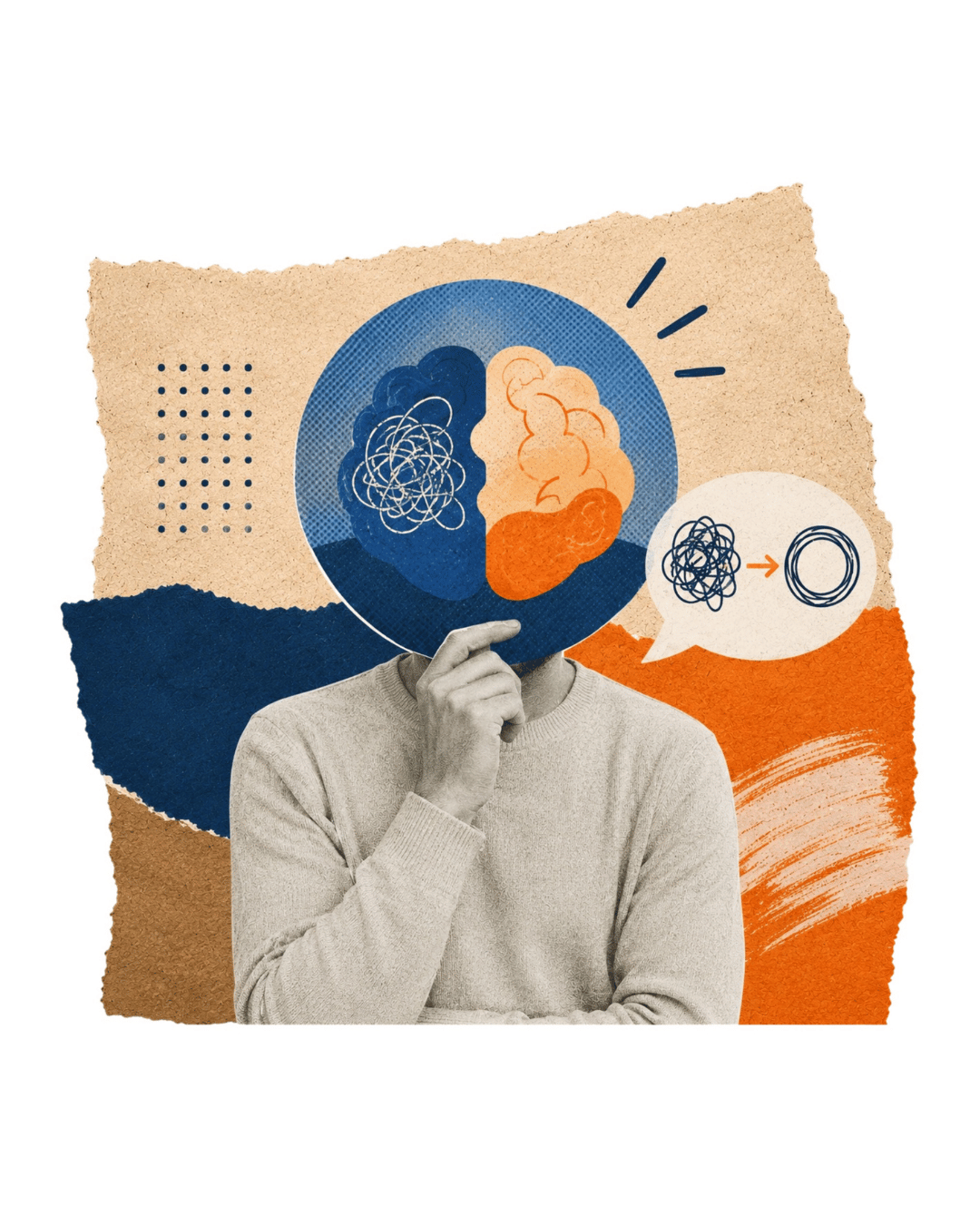
CBT helps you understand how your thoughts, emotions, behaviours, and stress responses influence one another.
You’ll begin noticing the patterns that may be keeping you stuck, whether that’s anxiety, perfectionism, avoidance, or constant self-criticism. It’s a practical, collaborative approach that combines emotional insight with real-life tools you can gently apply between sessions.
Over time, CBT can help you respond to yourself and your experiences with more clarity, balance, and self-awareness.
Might suit you if:
01
You prefer a practical, collaborative approach with tools you can apply in everyday life
02
You feel caught in patterns of overthinking, self-criticism, or emotional overwhelm
03
You’re experiencing anxiety, stress, burnout, low mood, or difficulty coping
04
You want to better understand your reactions and respond with more clarity and balance
Solution-Focused Brief Therapy (SFBT)
You want support that feels practical, focused, and forward-moving

Solution-Focused Brief Therapy focuses less on analysing problems in depth and more on identifying strengths, possibilities, and meaningful next steps. Rather than asking “What’s wrong with me?”, the approach gently explores what’s already working, even in small ways, and how to build on it.
You’ll clarify goals, notice existing resources, and identify realistic changes that feel achievable and sustainable. The process is collaborative, encouraging, and future-oriented without dismissing the difficulties you’re facing. Over time, SFBT may help you feel more hopeful, capable, and clear about where you want to move next.
Might suit you if:
01
You prefer a practical, goal-focused approach to support
02
You want to focus more on solutions and next steps than deep analysis
03
You’re navigating a specific challenge, transition, or decision
04
You want support that feels collaborative, encouraging, and empowering
Dialectical Behaviour Therapy (DBT)
When emotions feel intense, overwhelming, or difficult to manage

Dialectical Behaviour Therapy (DBT) helps you build skills to better navigate intense emotions, relationships, stress, and impulsive reactions while learning to balance acceptance with meaningful change. Originally developed for emotional dysregulation, DBT combines practical coping tools with deeper emotional awareness and self-understanding.
You may work on recognising emotional patterns, managing distress, improving communication, setting boundaries, and responding more effectively during emotionally charged situations. DBT often focuses on building skills around emotional regulation, distress tolerance, mindfulness, and interpersonal effectiveness in ways that feel realistic and applicable to everyday life. Over time, this approach may help you feel more grounded, emotionally balanced, and able to respond rather than react.
Might suit you if:
01
You experience intense emotions that feel difficult to regulate or contain
02
You struggle with impulsive reactions, emotional overwhelm, or relationship conflict
03
You want practical coping tools alongside emotional insight and support
04
You’re hoping to feel more stable, grounded, and in control during difficult moments
Trauma-Informed Approach
When your experiences have shaped how safe, connected, or in control you feel today

A Trauma-Informed Approach recognises that difficult, overwhelming, or traumatic experiences can have lasting effects on emotions, relationships, beliefs, the nervous system, and overall wellbeing. Rather than asking "What's wrong with you?", this approach asks "What has happened to you?" and seeks to understand how past experiences may influence present challenges.
The focus is on creating a safe, respectful, and collaborative space where your experiences are acknowledged without judgement or pressure. The approach prioritises emotional safety, choice, empowerment, and pacing, recognising that healing looks different for everyone. Over time, a trauma-informed approach may help you develop greater self-understanding, resilience, emotional regulation, and a stronger sense of safety within yourself and your relationships.
Might suit you if:
01
You’ve experienced difficult, overwhelming, or traumatic life events that continue to affect you
02
You struggle with feeling unsafe, emotionally overwhelmed, disconnected, or constantly on edge
03
You want an approach that prioritises safety, trust, collaboration, and personal choice
04
You’re looking to better understand how past experiences may be influencing your present life
Integrative Counselling
When your needs don’t fit neatly into a single therapy model

An Integrative Counselling combines insights, techniques, and perspectives from different therapeutic modalities to create a personalised approach tailored to your unique experiences, goals, and circumstances. Rather than following one specific framework, the focus is on drawing from approaches that best support your needs at different stages of your journey.
You may explore thoughts, emotions, behaviours, relationships, life experiences, and personal strengths using a blend of therapeutic approaches. This flexibility allows the work to adapt as your needs evolve, recognising that no single approach works for everyone. Over time, an integrative approach may help you gain deeper self-awareness, develop practical coping strategies, strengthen emotional wellbeing, and create meaningful, lasting change.
Might suit you if:
01
You have multiple concerns that may benefit from different therapeutic perspectives
02
You prefer a personalised approach rather than a single therapy model
03
You want both emotional exploration and practical strategies for change
04
You’re looking for support that can adapt to your evolving needs and goals over time
Strengths-Based Approach
When you want to build on what’s already working, rather than focusing only on what’s wrong

The Strengths-Based Approach focuses on identifying, understanding, and leveraging your existing strengths, resources, abilities, and resilience. Rather than viewing people primarily through the lens of problems or deficits, this approach recognises that everyone possesses qualities and capacities that can support growth, healing, and wellbeing.
You may explore personal strengths, past successes, values, coping resources, and areas of resilience that can help you navigate current challenges. This does not ignore difficulties or struggles, but balances them with a deeper appreciation of your capabilities and potential. Over time, a strengths-based approach may help increase confidence, self-efficacy, hope, and a greater sense of possibility.
Might suit you if:
01
You want to focus on your strengths, resilience, and existing resources for growth
02
You often find yourself focusing on what’s not working or what you lack
03
You’re looking to build confidence, self-belief, or a stronger sense of capability
04
You appreciate a positive, empowering approach that recognises your potential
Mindfulness-Based Techniques
When your mind feels constantly busy, pulled into the past, or worried about the future

Mindfulness-Based Techniques help you develop greater awareness of your thoughts, emotions, bodily sensations, and experiences in the present moment. Rather than trying to eliminate difficult thoughts or feelings, mindfulness encourages a more curious, compassionate, and non-judgemental relationship with them.
You may learn practices that strengthen present-moment awareness, emotional regulation, self-compassion, and the ability to respond thoughtfully rather than automatically. These techniques can be integrated into everyday life and are often combined with other therapeutic approaches to support overall wellbeing. Over time, mindfulness may help you feel more grounded, centred, and connected to yourself and your experiences.
Might suit you if:
01
You struggle with overthinking, worry, stress, or feeling mentally overwhelmed
02
You find yourself dwelling on the past or constantly anticipating the future
03
You want to develop greater emotional awareness and self-compassion
04
You’re looking for practical tools to feel more present, grounded, and balanced in daily life
Emotion Focused Therapy (EFT)
Emotions feel overwhelming, confusing, or difficult to express
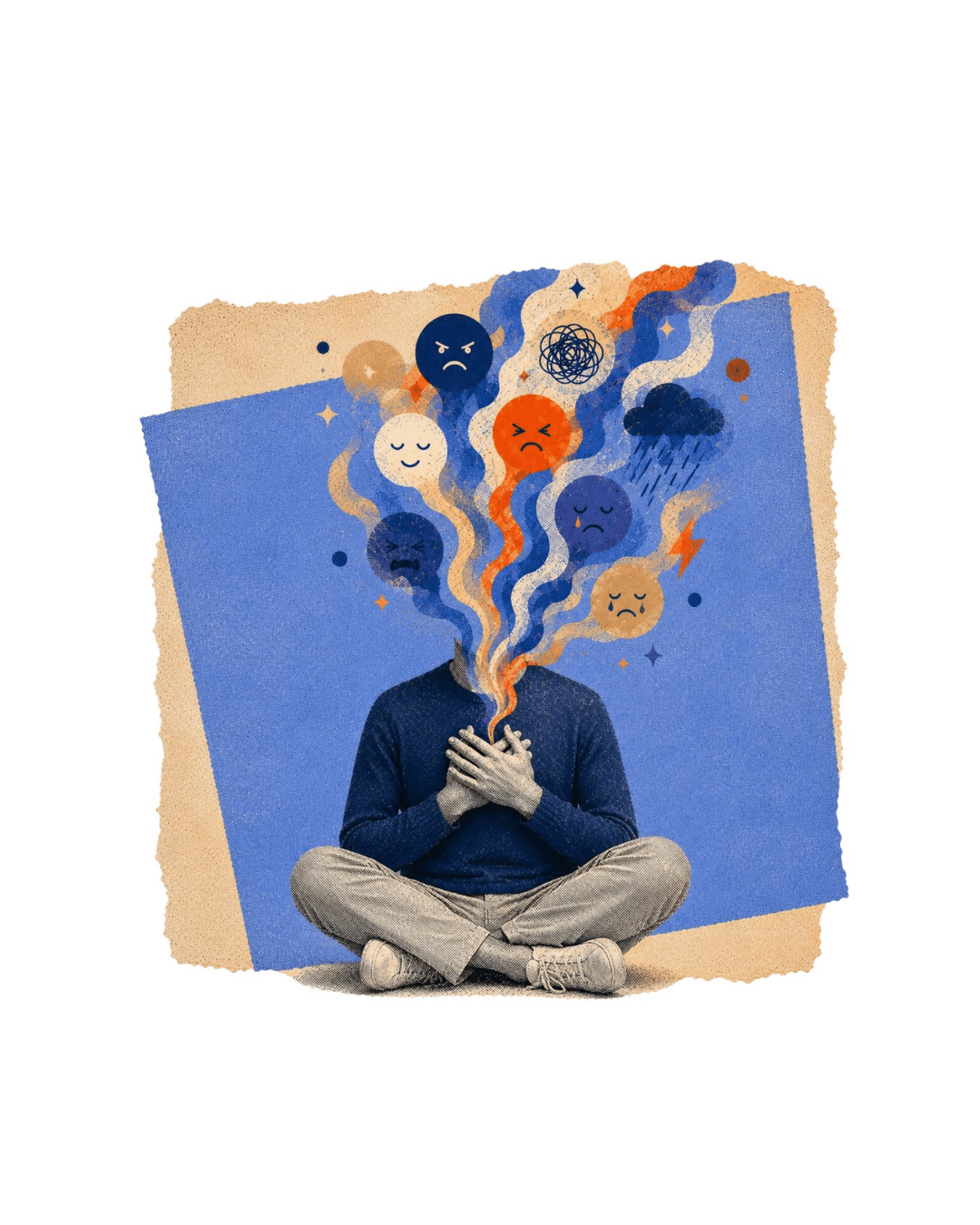
Emotion-Focused Therapy helps you better understand, process, and work through emotions rather than avoiding, suppressing, or becoming consumed by them. Sometimes emotions can feel intense, messy, or difficult to make sense of, especially when they’ve been held in for a long time.
You’ll explore the emotional experiences underneath your reactions, protective patterns, and relationship struggles. The goal is not to “get rid” of emotions, but to help them feel safer, clearer, and easier to navigate. Over time, EFT may help you feel more emotionally connected, regulated, and compassionate toward yourself.
Might suit you if:
01
You struggle with overwhelming emotions or emotional shutdown
02
You find it difficult to express, process, or understand your feelings
03
Your relationships are affected by emotional reactivity or disconnection
04
You want to develop a healthier relationship with your emotions
Choice Theory & Reality Therapy (CTRT)
When life feels out of control, and you want to focus on what you can change

Reality Therapy, based on Choice Theory, helps you explore how your choices, behaviours, and relationships influence your wellbeing. Rather than dwelling on the past, this approach focuses on the present - what you need, what you're doing, and whether your current actions are helping you move towards the life and relationships you want.
You'll explore your core needs, personal values, and patterns of behaviour, while identifying practical, realistic steps that align with what matters most to you. The emphasis is on recognising where you have influence and making intentional choices that support greater fulfilment, responsibility, and connection.
Over time, this approach may help you develop a stronger sense of personal agency, improve your relationships, and create meaningful changes that are within your control.
Might suit you if:
01
You feel stuck in patterns that leave you frustrated, disconnected, or dissatisfied
02
You want to focus on practical solutions rather than staying caught in past problems
03
You're looking to strengthen your sense of choice and personal agency
04
You want to build healthier relationships and make decisions that better reflect your values and goals
